
Sources for Revere Previous Residents
Previous residents research needs an era check before a name search. A modern parcel record gives the address in the form used by Revere systems. Recorded land then supplies ownership transfers, while selected directory and voting-list years add dated household or voter-presence clues. Revere permit files can date work and applications, but they begin online much later than the oldest deeds and directories. The source table below separates these tracks so an address can be traced without making a current record stand in for the past.
| Source | Years it covers | Where held | What it can show |
|---|---|---|---|
| Revere GIS and assessor record | Current parcel record | Revere GIS and Assessors | Starting parcel, legal address, available owner and assessment details |
| Suffolk recorded-land index | 1973 forward, beginning Book 8595 | Suffolk Registry portal | Indexed and imaged transfers, parties, and book/page links |
| Older Registry books | Book 194 in 1800 onward; 1970-72 under verification | Unindexed Property Search and Registry counter | Older deed images and historical research leads |
| Selected Revere directories | 1876 through 1940 | Massachusetts State Library and reference collections | Dated address and household clues |
| Revere voting lists | Selected years from 1918 through 1990 | State Library inventory and reference access | Historical voter presence, with a 1932 index-only entry |
| CitizenServe permit files | March 2018 forward | Revere Building Department | Permit, licensing, or development-file activity |
For a pre-1973 question, do not stop at the online name-index boundary. Begin with the parcel and the most recent deed you can identify, then use the legal description, book and page, and the Registry’s older-record paths.
Begin Revere Previous Residents Trail
Start the backward trail at Revere GIS. The map accepts an address, owner name, or parcel ID. After selecting a result, choose ASSESSMENT and review the Owner, Assessment, Sales, and Links panels. Record the legal or situs address, parcel ID, any mailing address shown, and sales information that is available. A mailing address can be useful for distinguishing an owner record, but it is not evidence that the owner lived at the property.
The Revere GIS documentation describes the address, owner, parcel, and abutter workflow that anchors an address history.
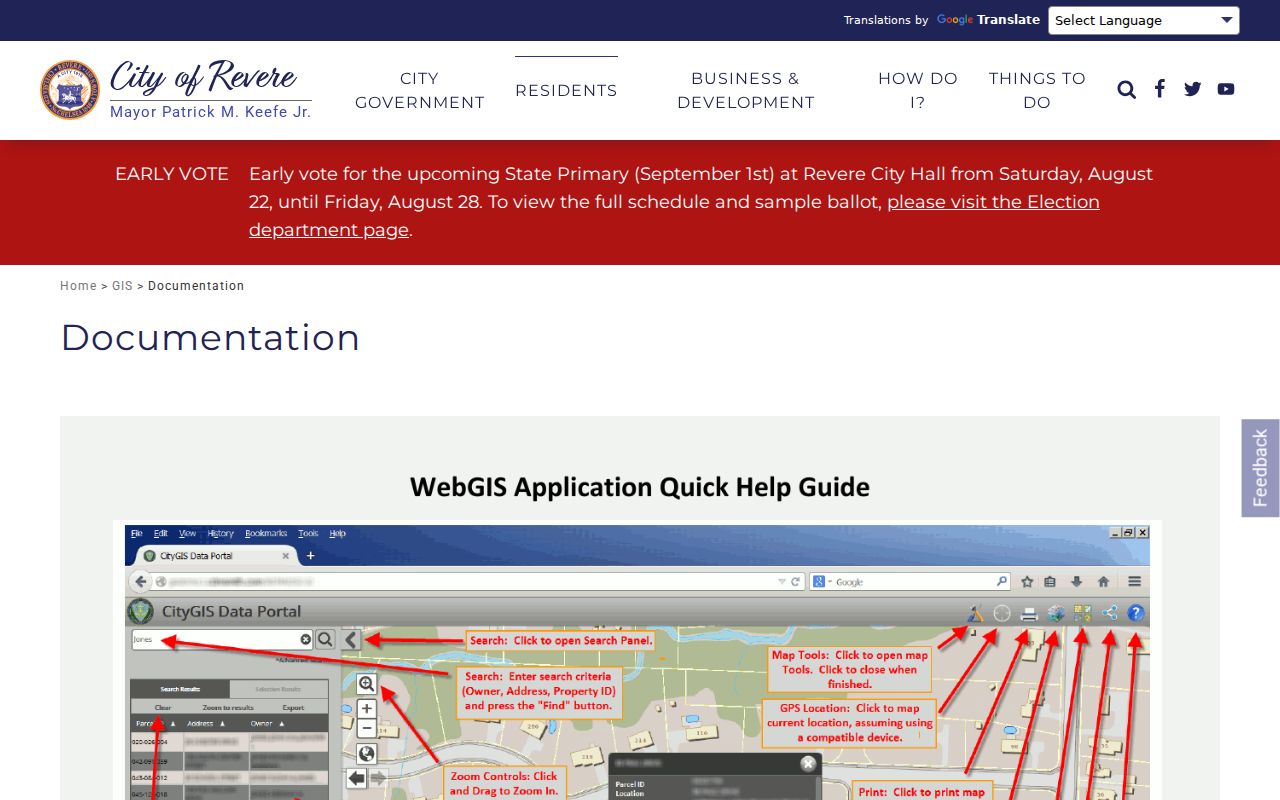
The parcel ID keeps the search tied to the same property when an old deed, a plan, or a directory uses an incomplete street reference.
Get Abutters can also help separate a parcel from similarly named nearby properties. Enter a buffer distance in feet or meters, run the buffer, and export the returned parcel set if it helps identify lot context. It does not establish who lived at any of those locations.
Revere Previous Residents and Deeds
Ownership history is not the same as an occupant history, but it is the durable backbone for a Revere address trail. Start with the current owner shown by the parcel record, locate that person’s acquisition as a grantee in the Suffolk Registry, then use the seller as the next name to search. Capture the document number or book and page, recording date, party roles, legal-description wording, and any plan reference at each turn. Those details protect the trail from same-name errors and streets that appear differently over time.
- Record the current parcel’s legal address, parcel ID, owner clue, and available sales detail.
- Search the current owner as a grantee in the Suffolk Registry and open the acquisition instrument.
- Copy the seller, recording date, book/page or document number, and legal description from that instrument.
- Search that seller as a prior grantee, using the legal description and plan information to distinguish the property.
- Repeat the chain backward, switching to Book Search or Unindexed Property Search when the name index is not enough.
- Grantor
- The party transferring an interest in the recorded instrument.
- Grantee
- The party receiving that interest. In a backward chain, a seller in one deed is often a grantee in an earlier acquisition.
- Chain of title
- The sequence of recorded transfers and related records used to follow ownership of one property over time.
- Legal description
- The lot, plan, boundary, or other property wording in a deed. It is often stronger than a street address in older records.
Read the instrument image as well as the result list when it is available. The index is a route into the record, while the image can supply the legal-description wording and plan references needed to keep the Revere address trail on the right parcel. For older material, the Registry counter remains the stronger historical-research channel when the online route does not resolve the next link.
Revere’s 1973 Deed Index
The Suffolk Registry of Deeds has a meaningful online boundary. Recorded-land names are indexed and imaged from 1973, starting at Book 8595. The 1970 through 1972 material is being verified and re-indexed, so a result in that period is unverified where available and an empty response is not conclusive. Older images reach to Book 194 in 1800 through Unindexed Property Search. The Registry states that its website does not contain every record and that historical or genealogical work is best done in person.
Use the portal’s Property, Name, Document, Book, Recorded Date, and Unindexed Property options as the trail changes. Older deeds can omit an address or carry an inaccurate form, so book/page, plan references, legal description, and grantor/grantee names become the key cross-checks. The Registry office is at 24 New Chardon Street, Boston, and its phone is 617-788-8575.
Note: The online 1973 index point marks a search-method change, not the beginning of Revere property records.
Revere Probate Gaps in Title
A deed chain can pause when a property passed through an estate rather than a routine transfer. Registry guidance specifically cautions that transfers to heirs may be recorded through the Registry of Probate and may not appear as a conventional deed transfer. When the next prior grantee cannot be found, retain the last confirmed legal description and consult Massachusetts Trial Court Case Access or the Suffolk Probate and Family Court route for an estate-related lead. The court file is held by its clerk or register, even when a docket entry appears online.
This is a reason to describe a prior owner and a past household separately. A probate event can connect a family to property history without proving that every beneficiary or relative lived at the address.
Revere Past Households in Directories
Directories place household clues between deeds. The Massachusetts State Library’s official inventory lists selected Revere city directories from 1876 through 1940, plus selected voting-list years beginning in 1918. Search an available surname index, preserve the spelling and address exactly as printed, then test a street or address section where the volume offers one. No complete official Revere reverse or criss-cross run was confirmed, so do not assume every year can be searched from an address.
The Library of Congress city-directory guide explains the common surname and address arrangements that make these volumes useful for historical research.
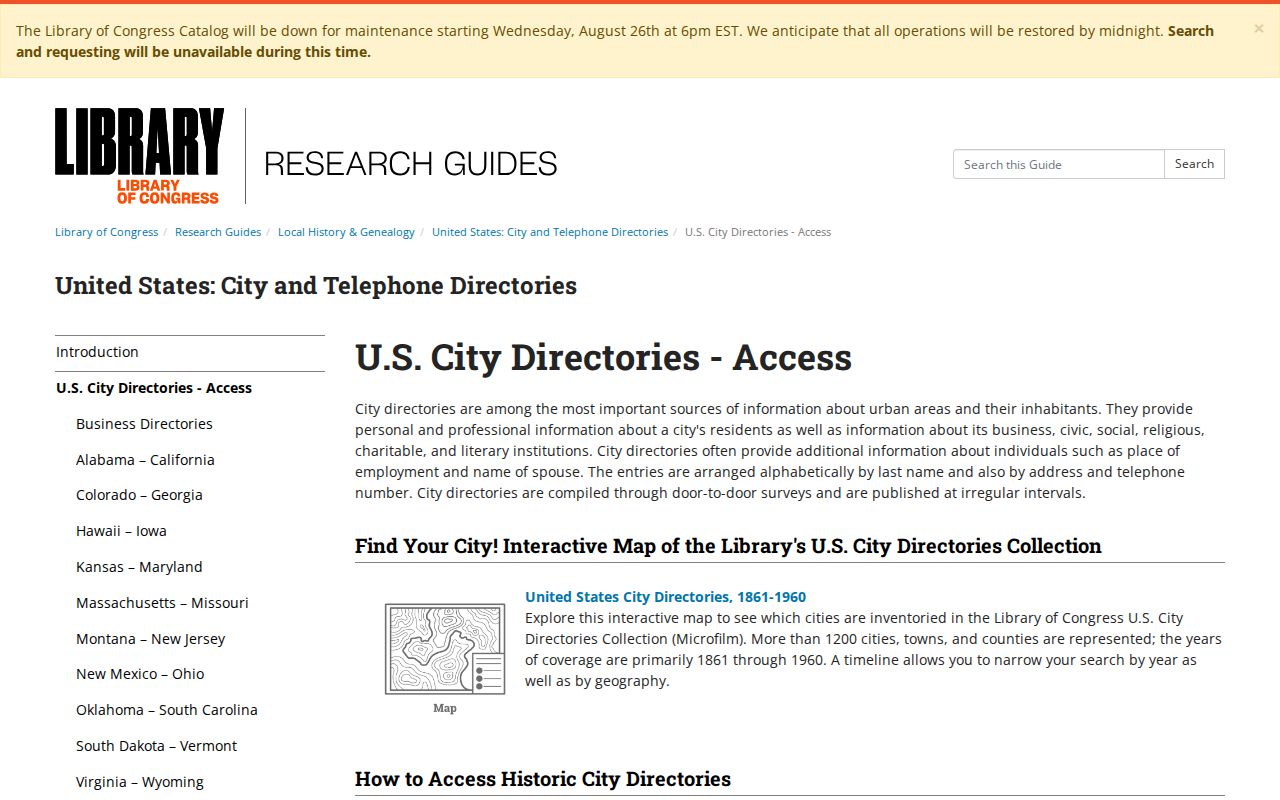
Read the original directory page when possible because OCR can misread names and address abbreviations.
- Match an available directory year to the date range suggested by the deed trail.
- Record the name spelling, address form, and any household notation exactly as printed.
- Compare the next available directory year for a move, a new household reference, or a changed address form.
- Pair the result with the available 1900, 1910, 1920, 1930, or 1940 census schedules, then test property ownership through deeds.
The collections and year runs are described in more detail on the Revere Directory Book. A directory entry is a dated lead, not proof that the person remained at the address.
Revere Permits Date Address History
CitizenServe adds an address-linked activity trail for modern Revere property history. The Building Department says public-view applications, reviews, inspections, and documents are available for applications from March 2018 onward. Search after logging in if required, choose a File Type, and enter the street number and street name without the suffix. The system searches the legal assessing address, so a postal form can fail while the parcel ID or GIS legal address succeeds.
The Revere City Clerk is the route for older building records and City Hall public-record requests.
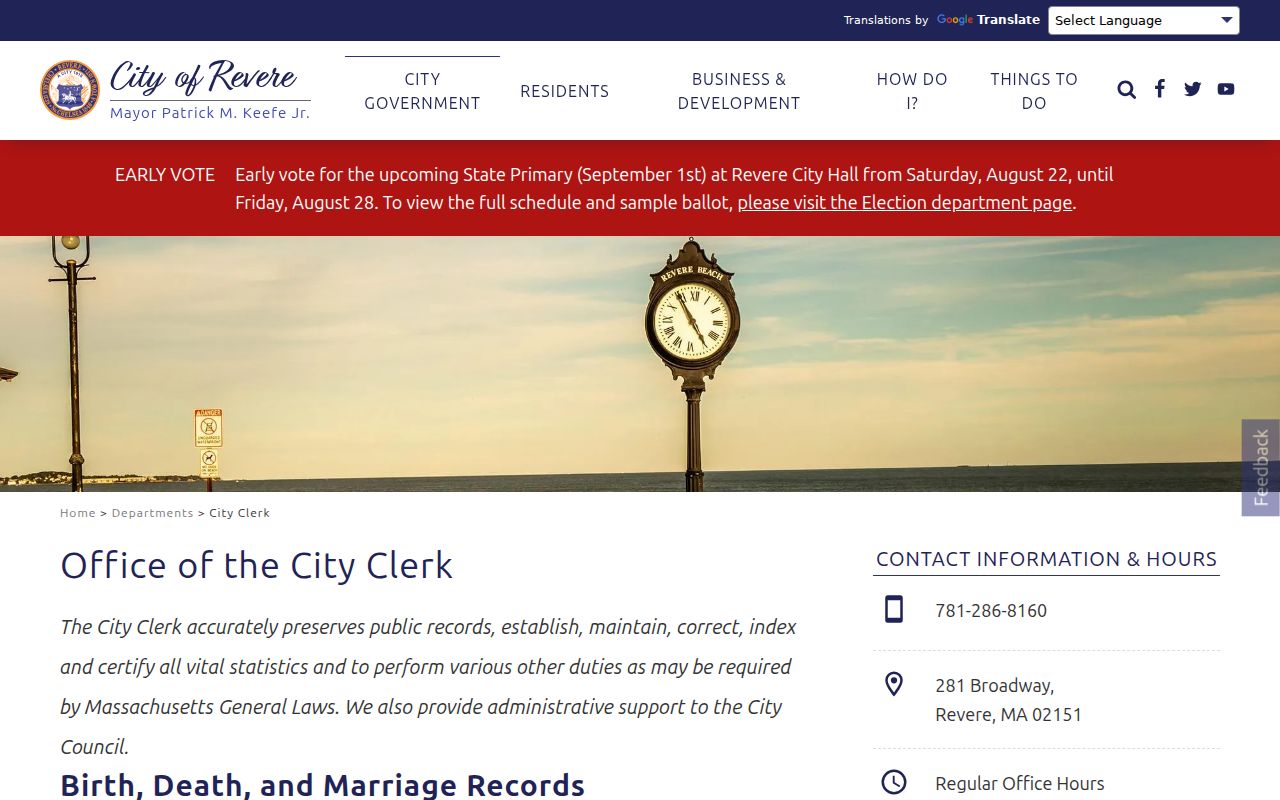
Permit activity can date work or an application at a parcel, but it should not be treated as proof of every person connected with that address.
Revere Names Before 1871
Older address research must account for the city’s former name. Massachusetts identifies the community as incorporated in 1846 as North Chelsea, renamed Revere in 1871, and made a city in 1914. Test both Revere and North Chelsea in nineteenth-century directories, maps, Registry materials, and the digitized Revere Journal. A place-name difference can explain a weak result without meaning that the property is outside the modern city.
When the street number itself looks unfamiliar, compare city maps, Registry plans, legal descriptions, and newspaper notices. No official Revere street-renumbering or street-renaming date was found in the research, so a specific conversion should not be assumed.
Limits on Revere Previous Residents
Records for past residents are incomplete by design. A deed identifies a recorded property interest, not every person who lived there. Directory volumes are available only for selected years and may reflect a household head, telephone subscriber, or business reference. Voter lists concern registered voters and omit confidential records. The City Clerk, State Library, Registry, and library reference desk provide different access channels because no single Revere source supplies a complete address-by-address history.
Lawful personal use. Use Revere address-history records for family history, property research, estate questions, and personal curiosity. Do not use them to stalk, harass, track, intimidate, or harm a living person.
Keep a small source log with the address form, parcel ID, date, office, and record type. That makes it possible to separate a verified transfer from a historical clue and to revisit the right custodian when a gap remains.